Home >>Bladder cancer
What are tests done in bladder cancer ?
Urine examination (to detect or confirm microscopic hematuria)
Urine culture (to rule out Urinary Tract Infection)
Urine cytology (to detect cancer cells by examining cells flushed from the bladder during urination)
What are symptoms of bladder cancer?
Primary symptom of bladder cancer is blood in the urine (hematuria). Hematuria is usually painless. Other symptoms include frequent urination and painful urination (dysuria).
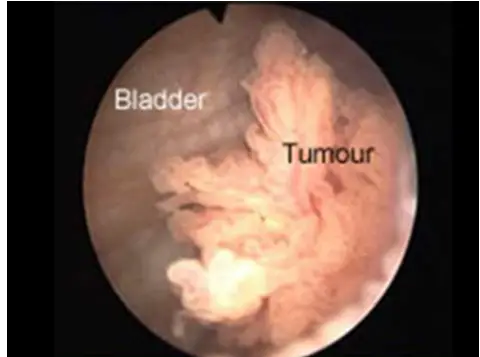
Cystoscopy and urethroscopy is an internal examination of urethra and bladder. The cystoscope is an instrument like a telescope, which is inserted through the urethra in to the bladder. It allows the doctor to view the inside lining of the urethra and bladder and take samples of bladder cancer for biopsy and diagnosis.
CT scan or MRI can be used to gain detailed information about spread of bladder cancer in the body.
What is treatment of superficial( not involving bladder too deeply) bladder cancer?
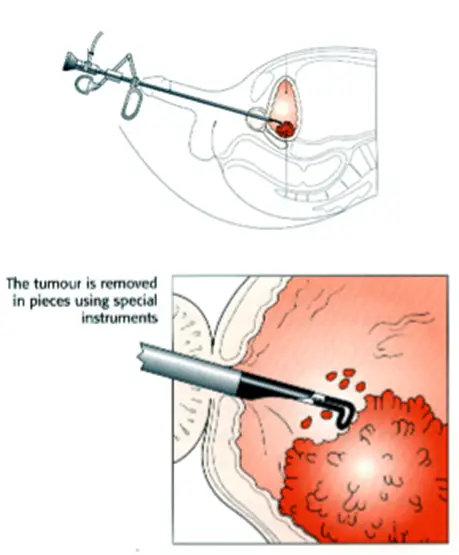
Using a specialised telescopic instrument, the bladder tumour can be scraped and removed through the urethra. There is no operation or scar in the abdomen. This operation is called TURBT.
The resected tumour is then sent to the lab for microscopic study to confirm the nature and stage of cancer.
Certain therapies that can used to prevent reappearance of bladder cancer after treatment include BCG vaccine or mitomycin treatment administered directly inside the bladder.
Using a specialised telescopic instrument, the bladder tumour can be scraped and removed through the urethra. There is no operation or scar in the abdomen. This operation is called TURBT.
The resected tumour is then sent to the lab for microscopic study to confirm the nature and stage of cancer.
Certain therapies that can used to prevent reappearance of bladder cancer after treatment include BCG vaccine or mitomycin treatment administered directly inside the bladder.
What is invasive bladder cancer and how it is treated?
Invasive tumour that has invaded the bladder muscle.
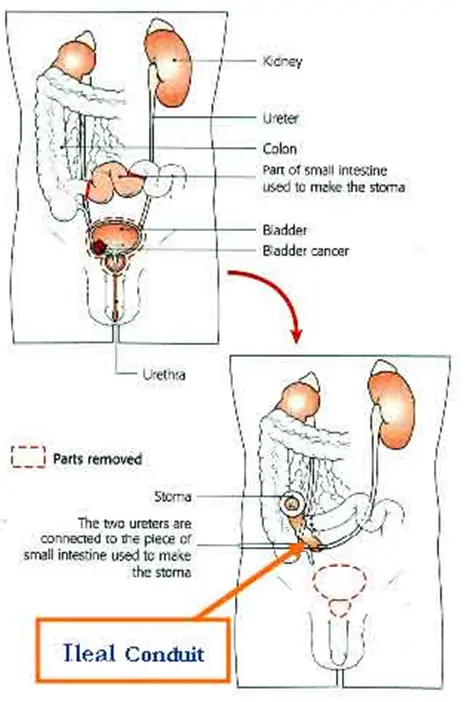
Treatment involves removal of entire bladder and reconstruction (cystectomy)
Types of bladder reconstruction include ileal conduit, c= and neobladder.(using the intestines to create a new bladder.)
Radical cystectomy with formation of ileal conduit is the gold standard treatment
The benefits of removing the bladder are to control disease, eradicate symptoms associated with bladder cancer and long-term survival.
For advanced bladder cancer that has spread radiation and chemotherapy are treatment options.